

Animated video series Warmer, drier homes
While working as an Eco Design Advisor for the Hutt City Council, I created these videos to simplify the essentials of a healthy home. They cover the 'big three'—ventilation, insulation, and heating—to help you keep your space warm and dry. With 6,000+ views and counting, these videos are a proven resource for anyone seeking a warmer, drier, and more comfortable place to live.


Some thermal imagery photos
These thermal images were captured during my time at Hutt City Council and offer a unique look at how our homes perform. To read the photos, check the temperature gauge on the right: lighter colours represent warmth, while darker shades show where heat is escaping. I hope these visuals give you a fresh perspective on where your home might be losing energy and how you can fix it.
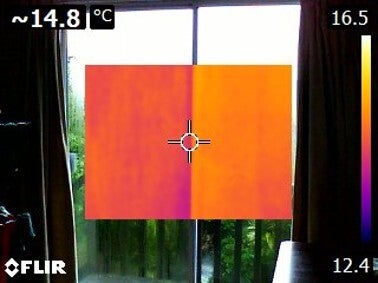
Wet windows are colder than dry windows
This photo of a ranch slider shows the cooling impact of condensation. On the left, the window is wet, while the right side is dry. You can see that the dry surface is several degrees warmer than the wet windows. This means leaving 'crying windows' in your home actually drains heat and keeps the room colder. It’s a great reminder that wiping away moisture isn't just about preventing mould—it actually helps keep your home warmer.
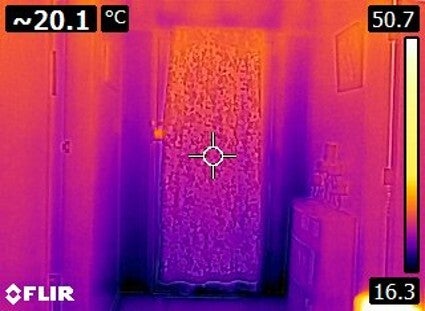
Cold spots around curtains
Here’s a great example of why curtain fit is so important. This front door has a thin curtain that doesn’t quite cover the sides or reach the floor. The dark colours in the thermal image show exactly where heat is escaping through those gaps. It’s a clear reminder that for curtains to really work, they need to create a complete seal against the cold.
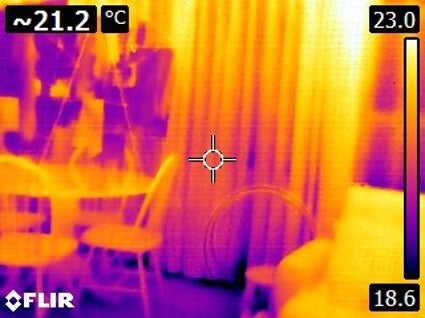
Stories told in pixels
This photo clearly illustrates what happens when curtains don't reach the floor. The dark colours at the bottom show cold air 'dumping' into the room, which pushes your warm air out of the way. It’s a great visual reminder that floor-length curtains are essential for trapping heat and stopping those cold floor-level drafts.
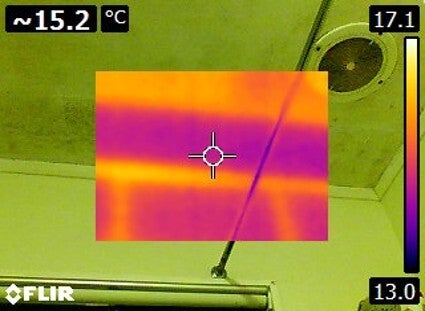
Mould around the perimeter
This image shows mould growing along the edge of a ceiling, with the thermal overlay revealing why: there’s a gap in the insulation. The thermal camera shows the mould is forming exactly where the insulation fails to reach the wall. If you notice similar patterns in your home, it’s a good sign that your ceiling insulation needs to be extended to the edges.